Material Spotlight: Plant-Based Foams, Latex, and Sourcing Ethics in Eco-Friendly Mattresses
Explore the core plant-based materials used in vegan mattresses, including natural latex and plant-based foams, and understand how certifications and ethical sourcing shape vegan claims. This guide helps readers evaluate material performance, durability, and environmental impact to make informed choices.
The mattress industry often speaks in a shiver of acronyms and certifications, yet at its heart lies a conversation about comfort, health, and responsibility. The term vegan mattress—once a whisper in green circles—has grown into a defined niche where plant-based foams and natural latex meet rigorous standards. To read a vegan mattress correctly is to read its materials as you would read a biography: with attention to origin, process, and ongoing stewardship. This article navigates the terrain of plant-based foams, latex, and the ethics of sourcing, while weaving in voices from three pivotal figures across time who illuminate the evolution of sustainable comfort.
The piece advances three through-lines. First, what counts as vegan in the world of bedding? Second, how do plant-based foams and latex compare in terms of durability, temperature regulation, and care? Third, which certifications truly matter for ethically sourced, vegan-friendly sleep surfaces? Read on to understand how these threads interlace into everyday choices—whether you're selecting a yoga mat, a mattress pad, or the core of a vegan mattress itself.
What counts as vegan in bedding?
Veganism, when applied to mattresses, extends beyond animal-free products. It encompasses cruelty-free production, chemical safety, and transparency in naming. A vegan mattress typically avoids animal-derived materials (such as wool or silk) or uses them only under a vegan-certified supply chain. It also implies that the manufacturing process minimizes animal testing and questionable animal-derived additives. But vegan is not synonymous with “natural” or “organic.” A vegan mattress may combine plant-based foams, natural latex, or cotton with synthetic components as long as the vegan claims remain truthful and verifiable.
To navigate claims, readers should consider three pillars: material composition, a transparent supply chain, and independent certification. The layers of a mattress—whether a foam core, latex top, or comfort padding—each carry a potential vegan story, and a credible label will disclose where materials originate and how they’re processed. In the textile world, certifications from GOTS (Global Organic Textile Standard), GOLS (Global Organic Latex Standard), CertiPUR, and Vegan Society provide signposts for those seeking assurances beyond marketing language.
Plant-based foams: performance without compromise
Plant-based foams occupy a growing niche in vegan mattresses, offering alternatives to traditional polyurethane foams with a lower environmental footprint. These foams rely on plant-derived polyols or other plant-based feedstocks to replace a portion of traditional petrochemical content. The result can be a cushion that still delivers comfort, support, and durability, while reducing reliance on animal-derived or petrochemical inputs.
Durability and feel vary by formulation. Plant-based foams can be engineered for resilience, with some designed to resist impressions, maintain spinal alignment, and manage temperature through open-cell structures or enhanced airflow. Temperature regulation—an essential factor for sleepers who run hot or cold—can be influenced by the foam’s cell structure, ventilation, and the choice of cover material. In practical terms, a plant-based foam layer might feel different from a latex layer; it may offer quicker rebound or a slightly firmer baseline, depending on density and formulation. Consumers should balance density, firmness, and breathability with personal sleep preferences.
Care considerations for plant-based foams emphasize avoiding excessive heat and direct sun exposure that could accelerate aging. Like all foams, these materials benefit from proper airflow around the mattress and, where applicable, breathable covers that do not trap heat. For vegan households, selecting a foam with clear vegan certification and a transparent supply chain is crucial to ensuring that the material stays true to its promises over time.
Natural latex: tactile resilience and temperature balance
Natural latex stands apart in the vegan landscape as a well-established material that offers buoyant support and a distinctive “bouncy” feel. Harvested from rubber trees, latex cores can be Dunlop or Talalay processed, and when certified, they often carry the assurance of ethical sourcing and non-toxic finishes. The sensation of latex is different from memory foam or conventional polyfoams: it tends to resist sinking, provide consistent support, and facilitate air movement that helps regulate temperature.
In vegan mattresses, latex may be used as a core or as a comfort layer, sometimes in combination with other plant-based foams. The degree of firmness, the distribution of latex layers, and the presence of an organic or vegan-certified cover all shape the sleep experience. For sleepers with sensitivity or allergies, natural latex can be a compelling option, provided the product is certified for low dust-mite content and free from undesired chemical residues.
Sourcing ethics and what to verify
Ethical sourcing in vegan mattresses hinges on more than material choice. It requires traceability from raw material to finished product, fair labor practices, minimal environmental impact, and accurate vegan labeling. Certifications function as navigational beacons in a crowded market. Three key certifications to understand are:
- GOLS (Global Organic Latex Standard): verifies organic latex production and processing, along with environmental and social criteria.
- GOTS (Global Organic Textile Standard): governs organic textiles, including bedding fabrics and linings, ensuring chemical safety and sustainable practices.
- CertiPUR: focuses on foam emissions and chemical safety, ensuring low VOCs, though not a blanket vegan certification by itself, it often accompanies vegan claims.
Additional vegan-specific recognitions, such as those from the Vegan Society, can offer consumer confidence that no animal products are used in the product nor in its testing. When reading product pages or supplier disclosures, look for explicit statements about the sourcing of latex (e.g., fair-trade or responsibly harvested), the absence of animal-derived additives, and the chain of custody for each material. A credible label will also address manufacturing ethics, including worker safety and environmental stewardship, not merely the end product.
Material comparisons: latex vs plant-based foams
To illuminate the practical differences, consider a compact comparison:
- Durability: Natural latex often outperforms many plant-based foams in long-term resilience, maintaining supportive loft longer under typical sleep loads.
- Temperature regulation: Latex tends to offer excellent airflow due to its cellular structure, while certain plant-based foams can be engineered for similar breathability but may require careful layering with breathable covers.
- Care: Latex and plant-based foams require similar care—keep surfaces clean, avoid prolonged exposure to direct sunlight, and use breathable, non-slip mattress covers.
- Certifications: Latex-focused products frequently pair with GOLS, while plant-based foams may emphasize CertiPUR or other foam-grade certifications alongside vegan labels.
In practice, the choice between latex and plant-based foams hinges on personal feel preferences (support, bounce, contour) and the degree to which a sleeper prioritizes vegan-certification transparency and environmental responsibility. The good news is that both paths align with the broader ethos of eco-conscious bedding: reducing animal-derived inputs, minimizing chemical exposure, and supporting sustainable manufacturing practices.
Three key individuals across time who illuminate the conversation
From the early modern era to contemporary sleep science, three figures—each representing a different epoch—offer intellectual scaffolding for understanding material ethics and comfort. Their perspectives, while not always directly about vegan mattresses, illuminate how we think about materials, care, and conscience.
Marie Curie (1867–1934)
Pioneer of scientific inquiry and a relentless advocate for rigor and integrity.
Curie’s relentless pursuit of empirical truth—grounded in experimentation, measurement, and the careful cataloging of results—offers a heuristic for how to approach vegan mattress research. When evaluating materials, one should treat claims with the same disciplined skepticism Curie applied to her radioactivity work: demand clear evidence, reproducible testing, and transparent methodology. Her legacy reminds us that ethical standards in science, when translated into consumer products, require open disclosure of tests, datasets, and limitations.
Margaret Mead (1901–1978)
Anthropologist who explored cultural values and material culture with a humane lens.
Mead’s work on how communities interpret objects and practices—such as clothing, housing, and ritual goods—offers a cultural lens for vegan bedding. Her insights remind us that consumer choices are embedded in values, rituals, and communal narratives. A vegan mattress, then, is not merely a product; it is part of a broader lifestyle conversation about humane production, ecological stewardship, and how a bedroom can reflect a shared ethic.
Donella Meadows (1941–2001)
Environmental scientist and systems thinker who studied the dynamics of sustainability.
Meadows urged attention to feedback loops, systems interdependence, and long-term consequences. In the context of vegan mattresses, her approach pushes readers to consider supply chains, circularity, and the environmental ripples of material choices. What begins as a personal sleep decision can echo through labor practices, forest stewardship, and waste streams—if one chooses to read the product as a node in a wider ecological system.
A quick guide to verification: how to read vegan claims
Readers seeking to verify vegan claims in bedding can adopt a practical checklist:
- Identify the materials: confirm whether components like latex, foams, cotton, or other fills are animal-free or processed with animal-derived additives.
- Confirm certifications: look for GOLS, GOTS, CertiPUR, and Vegan Society marks, and read what each certification covers (organic status, processing standards, emissions, chain of custody).
- Inspect the supply chain: seek brands that disclose suppliers, mills, and testing protocols; ask for third-party audits or traceability documentation when possible.
- Examine end-to-end ethics: consider labor practices, environmental impact, and waste management in the manufacturing process.
For the modern shopper, certification is a map; never hesitate to ask for documents, test results, and confirmation of vegan claims across all material layers. The more transparent the brand, the more credible the product.
A representative product to ground the discussion
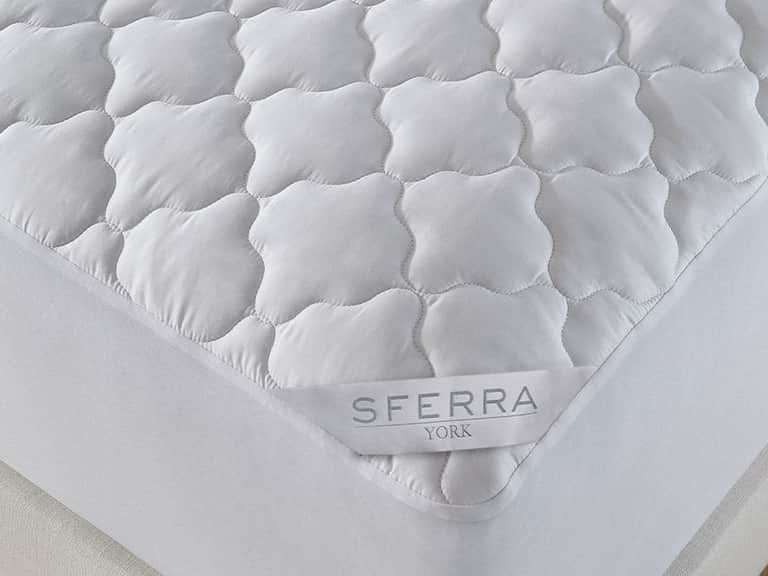
Among the options in vegan-friendly bedding, the following product (presented here with its features) offers a tangible touchpoint for readers who want to translate theory into practice. The York Mattress Pad, a luxurious down-alternative pad, demonstrates how vegan comforts can be engineered for loft, breathability, and a soft surface that still respects ethical constraints.

York Mattress Pad
Luxurious down-alternative mattress pad with 100% premium cotton fill and 300-thread-count cotton sateen shell.
Material: 100% Cotton fill; 300TC cotton sateen. Care: Machine wash cold on gentle; tumble dry low; avoid agitation and bleach.
Price: $295.00
This product embodies the blending of comfort, vegan ethics, and transparent materials that readers should seek. While it is an example from a retail catalog, the central message remains: a vegan product can deliver luxury and performance when built with plant-based, non-animal inputs and a clear disclosure of materials.
Conclusion: shaping a conscious sleeping culture
In the evolving dialogue around vegan mattresses, the market invites more than a preference for cruelty-free claims; it invites a culture of discernment, curiosity, and care. The plant-based foam and natural latex narratives are not merely about feel and support—they are about the ethics of production, the science of materials, and the stories we tell inside our bedrooms about the world we want to live in. By arming ourselves with knowledge of materials, certifications, and sourcing ethics, we can sleep better not just in body, but in conscience.
As with the three figures who guided us—Marie Curie, Margaret Mead, and Donella Meadows—the path to a more responsible sleep environment is not a single innovation but a sustained practice: investigate, verify, and hold brands to account. The horizon for vegan bedding is bright with possibility, especially as transparency becomes a standard feature rather than a marketing ploy. The goal is not purity in a single material but integrity across a system—ensuring that the quiet revolution of sleep reflects a louder commitment to the planet, its creatures, and the people who labor to bring us rest each night.
Resources and glossary
To support ongoing exploration, here are suggested topics and terms for readers to dive into:
- Glossary of vegan bedding terms: vegan, cruelty-free, GOTS, GOLS, CertiPUR, Made Safe, Vegan Society.
- Certified brands and mills: how to interpret supplier disclosures and ensure credible chain-of-custody.
- Care guides for vegan mattresses and accessories to maximize lifespan and performance.
References and further reading
For readers seeking deeper understanding, consider primary sources from certification bodies, scholarly material on plant-based materials, and experimental sleep science literature. Always cross-check the latest standards, as certifications and criteria can evolve with new research and industry practices.