Mattress materials & support
How Obasan’s Modular Mattress Layers Let You Fine-Tune Support
A mattress is often described as though it had one defining quality: firm, soft, supportive. In practice, it is a small landscape of materials, each doing a different job. A modular design makes those jobs easier to examine—and, depending on the model, easier to adjust.
When comparing an Obasan mattress or any layered organic mattress, the useful questions are less about whether a bed is simply “soft” or “firm” than about where that sensation comes from. Which layer cushions the shoulder? Which carries the hips? Can the comfort layer be changed without replacing the whole mattress? And do the materials and care instructions suit the way you actually sleep?
What “modular” means in a mattress
A conventional mattress is built as a unit. Its comfort materials and support core are assembled, enclosed, and intended to remain together. A modular mattress takes a more legible approach: separate layers perform distinct functions, and the construction may allow one or more of them to be rearranged, exchanged, or replaced.
The word can cover different arrangements. Some mattresses have a zippered cover that gives access to several internal layers. Some allow the sleeper to choose firmness when ordering but do not invite later changes. Others offer replaceable components, or split layers that let two people on a larger bed select different feels on their respective sides. These are not interchangeable claims. “Layered” describes construction; “customizable” suggests a choice; “adjustable” or “replaceable” should be checked against the specific model’s instructions and terms.
That distinction matters because the appeal of modular mattress layers is not merely that they sound ingenious. It is that they can make a consequential purchase less final. A sleeper may discover, after several weeks, that a surface is too yielding or that pressure builds at the shoulder. If the relevant layer can be changed, the solution may be a targeted adjustment rather than a new mattress. But that benefit depends on what the manufacturer actually permits, how exchanges work, and whether the changed layer addresses the problem.
A mattress is a sequence of jobs
Think of a mattress as a set of negotiations between the body and the bed. The uppermost materials shape the first impression: plushness, contouring, and the way pressure is distributed. Beneath them, deeper layers influence how far the body settles and how evenly it is held. A support core—whether made from latex, coils, or another material—helps resist excessive sinking and contributes to the bed’s overall stability.
These functions overlap. A comfort layer does not simply make a bed soft, and a support layer does not alone determine whether it feels firm. The surface may feel gentle while the deeper construction keeps the pelvis from dropping too far. Conversely, a relatively firm upper layer can still sit over a structure that yields more deeply. This is why a number on a firmness scale, when one is supplied, can only offer a rough guide. People experience a mattress through their own proportions, sleeping habits, and expectations.
Layer thickness and material matter as much as the number of layers. A thick, soft layer can allow a different degree of immersion than a thin one made from a similar material. Latex is often described as resilient: it tends to respond promptly when weight shifts, rather than slowly taking on a deep impression. Coils can contribute lift and airflow, while cotton and wool in a quilt or cover affect the surface feel and temperature experience. The result is a system, not a single ingredient with a single effect.
Begin with your sleeping position, not a firmness label
Sleeping position offers a useful starting point, although it is not a prescription. Side sleepers often place concentrated pressure on the shoulder and hip. They may prefer enough give at the surface to accommodate those areas while keeping the torso supported. A mattress that is too firm for an individual can feel as though it pushes back at those points; one that is too yielding may let the body settle unevenly.
Back sleepers may look for a balanced surface that cushions the lower back without allowing the hips to sink excessively. Stomach sleepers often pay close attention to how much the midsection descends, since too much sink can feel uncomfortable. Combination sleepers have a further consideration: how readily the bed responds when they turn. A material that conforms closely may feel embracing to one person and restrictive to another.
Body size, weight distribution, and personal comfort all complicate broad rules. Two people who sleep in the same position can prefer different mattresses. The aim is not to identify an abstractly correct firmness but to find a configuration that feels comfortable and keeps the body in a position the sleeper can sustain through the night. If a bed has independent sides, partners can explore those preferences separately rather than treating compromise as a mattress specification.
- For side sleeping: notice pressure at the shoulder and hip, and whether the waist feels supported.
- For back sleeping: consider whether the lower back feels comfortably held and the pelvis stays level.
- For stomach sleeping: pay attention to sinking around the hips and abdomen.
- For combination sleeping: assess how easily you can change position and whether the surface rebounds comfortably.
These are observations, not medical conclusions. Persistent pain, numbness, or other symptoms deserve appropriate professional advice; a mattress guide cannot diagnose their cause.
What to ask when comparing Obasan configurations
The most helpful comparison begins with a clear description of what each option contains. Ask how many layers are involved, what each layer is made of, and what role the manufacturer assigns to it. If the available choices use terms such as soft, medium, or firm, ask which layer those labels refer to. A firmness choice for a top comfort layer may alter the surface impression without changing the deeper support structure; a different support component could produce a broader change.
Then establish what “modular” means for the particular mattress under consideration. Can layers be reordered, or are they intended to stay in a fixed sequence? Can an individual component be exchanged after delivery? Is the mattress designed for different configurations on the two sides? What is the adjustment period, and are there fees, shipping costs, or return conditions? A practical answer to these questions is more useful than the word “customizable” alone.
Do not assume that every layered mattress has the same architecture or exchange policy. Product lines change, and specifications may vary by size or model. Check the current manufacturer information and the seller’s written terms before choosing. If a configuration is discussed over the phone or in a showroom, request the details in writing, especially when the decision depends on which components can later be replaced.
It can also help to record the precise configuration you selected. Keep the order details, layer names, and care instructions together. If you later need to troubleshoot the feel, knowing the original arrangement gives you a better starting point than trying to reconstruct it from memory.
Materials deserve their own inspection
“Organic” is a meaningful description when it is tied to specific materials and credible certification, but it does not describe every property a sleeper may care about. Look for a component-by-component materials list: the core, comfort layers, quilting, cover, adhesives, and any flame-barrier materials. Certifications apply to defined scopes, so check what a particular standard covers rather than treating a logo as a complete account of the mattress.
For latex, ask whether the material is natural, what process is used, and whether certification is stated for the latex itself. Organic latex certifications such as GOLS concern the material and its supply chain within the certification’s scope. GOTS is associated with organic textile processing and can be relevant to certified cotton or wool textiles. Neither name should be taken to mean that every component in a complete mattress has the same status. CertiPUR, meanwhile, is a certification program associated with certain flexible polyurethane foams; it does not certify organic latex or establish that a product is vegan.
Vegan shoppers have an additional layer to consider. Wool is an animal-derived material, even when it is organic or responsibly sourced. A mattress may use certified organic latex and cotton but also include wool in its quilting or fire barrier. A buyer seeking a vegan sleep setup should verify the full bill of materials and ask directly about animal-derived fibers, adhesives, and processing aids where relevant. Certification for organic production and a vegan claim answer different questions.
This is where transparency becomes more valuable than a broad promise. A product page that names each material gives readers something concrete to evaluate. If the information is incomplete, asking the manufacturer is a sensible next step—not a sign of unreasonable scrutiny, but a basic part of buying a product meant to be used for years.
A topper can change the surface, but it is not the same as a modular mattress
There is a useful distinction between adjusting a mattress from within and adding a separate layer on top. A topper can alter the first impression of a sleep surface and may offer more cushioning. It does not necessarily change the underlying support system, nor does it make a fixed mattress modular. If the bed’s core is unsuitable for the sleeper, an accessory may not solve the deeper mismatch.
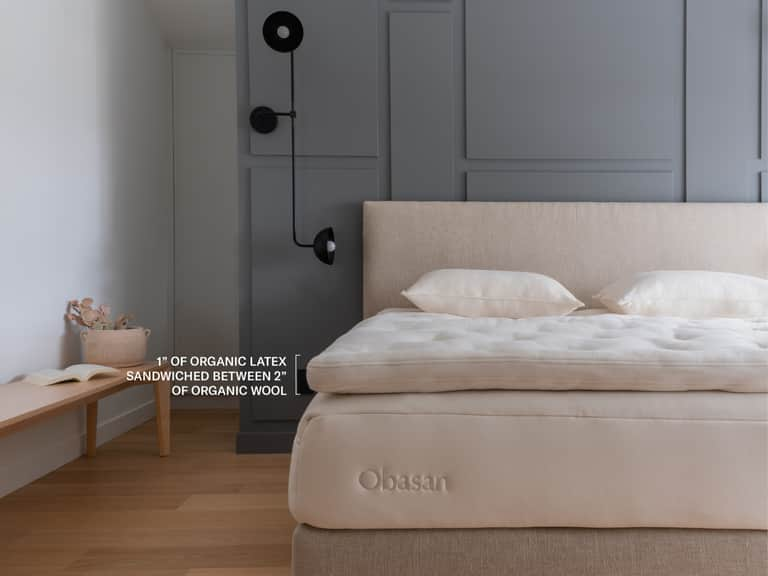
One example of a separate comfort accessory is the Obasan Deluxe Organic Wool and Latex Mattress Topper. Its listed construction includes 1.5 inches of GOLS-certified organic latex surrounded by organic wool, with a total thickness of 2.5 inches. That combination may interest someone looking to add a softer, cushioned layer, but it should not be confused with changing internal mattress layers. The product also contains wool, so it is not a vegan option.
Care requirements are part of the comparison. The listed topper should not be washed; its care guidance calls for careful spot cleaning, air drying, and protection from getting wet. A mattress configuration that can be adjusted but requires particular handling may suit one household better than another. Consider access, maintenance, and the realities of everyday use alongside the showroom feel.
How to test a configuration without rushing the verdict
A brief lie-down in a store can be useful for noticing immediate pressure or an obviously unsuitable feel. It cannot replicate an ordinary night, much less several weeks of sleeping in the same position, with the same pillow and bedding. Where a trial period is available, use it deliberately. Keep the sleep setup reasonably consistent, give your body time to adjust, and note what you observe rather than relying on a vague morning impression.
A simple record might include your usual sleeping position, whether you woke with pressure at a particular point, how readily you changed position, and whether the mattress felt different after the first few nights. Also note changes in pillow height, room temperature, or bedding. These can affect comfort, and changing several elements at once makes it harder to understand what helped.
If the feel seems wrong, identify the problem as specifically as possible before seeking an adjustment. “Too firm” might mean pressure at the shoulder, little cushioning at the surface, or a general lack of contour. “Not supportive” might mean the pelvis sinks, the lumbar area feels unsupported, or the bed moves more than expected. Precise descriptions help a retailer or manufacturer determine whether a different layer is relevant—or whether the issue lies elsewhere.
Review the return and exchange terms before the mattress arrives. A configuration option is valuable only if you understand how to use it and what it costs to change. Keep packaging or follow any setup instructions if they affect eligibility. Most importantly, do not treat a trial window as a guarantee of a particular result: it is an opportunity to assess the mattress under real conditions, subject to the stated policy.
Durability, repair, and the long view
Modularity can have a practical advantage beyond comfort: if a component wears differently from the rest of the mattress, replacing that part may be preferable to discarding the whole construction. Whether that is possible depends on the design, the availability of replacement layers, and the manufacturer’s policies. Ask how long components are expected to remain available and whether the cover can be repaired or replaced.
Natural materials are not automatically maintenance-free, and durability varies with construction and use. Rotate or turn the mattress only as instructed; some designs are not intended to be flipped. Use an appropriate foundation, protect the surface from moisture, and follow the maker’s cleaning guidance. A washable protector can help preserve the mattress, but its own materials should also meet the sleeper’s requirements.
Environmental claims are best assessed with the same care as comfort claims. Material sourcing, manufacturing, transport, expected useful life, and end-of-life options all matter. A modular mattress could reduce waste if a worn or unsuitable component can be replaced, but that potential is not the same as a quantified environmental benefit. The details—replacement availability, repairability, and what happens to removed materials—determine whether the promise is borne out.
A concise checklist before choosing
Before settling on a configuration, bring the decision back to a few plain questions. They help turn an appealing idea into a purchase you can evaluate.
- What materials are in every layer, including the cover and quilting?
- Which layer chiefly affects surface comfort, and which provides deeper support?
- Can components be rearranged, exchanged, or replaced after purchase?
- Are separate firmness choices available for each side of the mattress?
- What are the trial, exchange, shipping, and warranty terms?
- What cleaning and maintenance does the manufacturer recommend?
- Do the materials meet your organic, allergy, or vegan requirements?
- Is the foundation compatible with the mattress and its warranty?
The value of a mattress you can understand
The promise of modular mattress layers is not that they can anticipate every sleeper’s preferences. It is that they make the bed’s construction easier to discuss and, in some designs, easier to adapt. That can be especially useful when comfort is difficult to reduce to a label or when two people want different things from the same mattress.
For anyone considering Obasan, the sensible approach is to confirm the specific model’s layer structure, material composition, and adjustment policies rather than assuming that every configuration works the same way. Start with sleeping position and pressure points; examine the contribution of each layer; check the certifications against the materials they cover; and ask how a change would work in practice. The better the questions, the less a mattress purchase has to depend on guesswork.
In the end, a mattress is not a technical diagram but a place to sleep. Yet understanding what lies beneath the cover can make that ordinary act of choosing a little more deliberate—and the eventual comfort, if the layers are right, a little less mysterious.